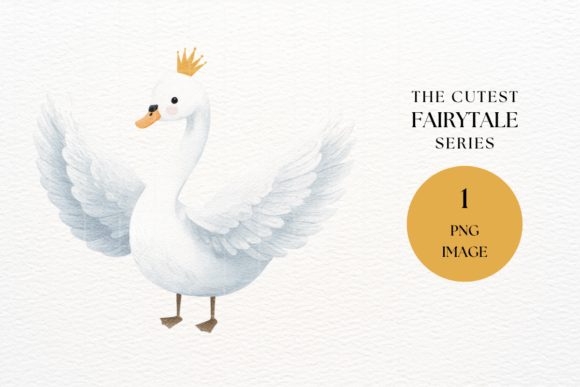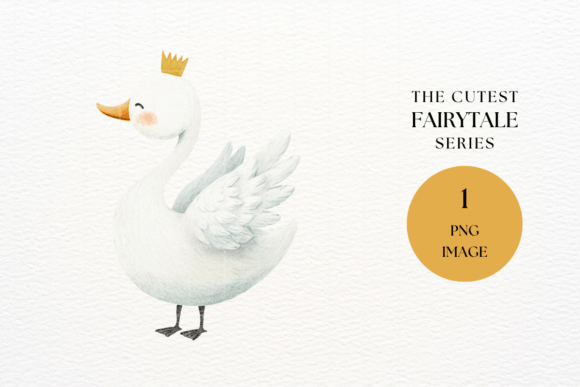
Swan Prince Clipart Fairytale Character: A Strategic Asset for Creative Workflows
In the landscape of digital design and content creation, the selection of visual assets is rarely just an aesthetic choice; it is a strategic decision that impacts workflow efficiency, brand consistency, and project outcomes. The Swan Prince Clipart Fairytale Character represents more than a simple illustration; it serves as a high-fidelity component within a broader creative process. Whether you are an educator preparing classroom materials, a small business owner designing party invitations, or a hobbyist curating a scrapbook, integrating this specific asset requires an understanding of its technical specifications and its role in your production pipeline.
This character illustration is designed to streamline the visual development phase of your projects. By offering a pre-rendered, high-resolution image with a transparent background, it eliminates the time-consuming tasks of vector tracing, manual masking, or complex photo editing. This allows creators to focus their energy on layout composition, typography, and overall narrative cohesion rather than getting bogged down in asset preparation. Understanding how to leverage this resource effectively can significantly reduce turnaround times while maintaining professional quality standards.
Technical Specifications and Workflow Integration
The foundation of any successful digital project lies in the quality and compatibility of its source files. The Swan Prince Clipart Fairytale Character arrives as a single, high-quality PNG file with dimensions of 3600x3600 pixels at 300 dpi. These specifications are critical for professionals who require print-ready assets without the risk of pixelation or blurriness. In a standard workflow, resolution is often the first point of failure when scaling designs from screen to print. With a 300 dpi density, this asset ensures that even large-format applications, such as nursery wall art or detailed poster prints, retain sharp edges and vibrant color integrity.
The transparent background is perhaps the most significant feature for integration purposes. In design software like Adobe Photoshop, Canva, or Affinity Designer, a transparent PNG allows for immediate layering over complex backgrounds, textures, or photographs. This removes the need for "magic wand" selections or pen tool outlining, which can be tedious and prone to error. For a freelancer managing multiple client deadlines, this feature translates directly into hours of saved labor. You can drag and drop the character into your canvas, resize it proportionally, and immediately begin adjusting opacity or blending modes to achieve the desired mood.
However, users must remain aware of the file format's limitations. While PNGs are excellent for raster-based workflows, they do not offer the infinite scalability of vector formats (SVG or EPS). If your project involves extreme resizing beyond the native 3600x3600 dimension, you may encounter quality degradation. Therefore, planning your layout dimensions before importing the asset is a crucial step in the preparation phase. Always verify your final output size requirements against the source resolution to ensure the best possible result.
Strategic Applications Across Industries
The versatility of the Swan Prince Clipart Fairytale Character extends across various sectors, each requiring a different approach to implementation. For event planners and party organizers, this asset is a cornerstone for invitation design. The whimsical nature of a fairytale prince aligns perfectly with birthday themes, baby showers, or themed galas. In this context, the workflow involves selecting complementary typography and color palettes that enhance the character without overwhelming it. Because the image is high-resolution, it works equally well on digital invites sent via email or printed on heavy cardstock.
For educators and school administrators, the character serves as an engaging visual aid for storytelling, reading comprehension exercises, or classroom decor. When creating lesson plans or bulletin boards, consistency in visual style helps maintain student focus. Using a single, cohesive character like the Swan Prince across multiple worksheets creates a recognizable theme that students can follow throughout a unit. This reduces cognitive load and makes learning materials feel more unified and professional.
In the realm of personal creativity, scrapbookers and journalers find immense value in this asset. The ability to print the image repeatedly on different paper stocks allows for mixed-media projects. You might use the character as a focal point on a memory page, combining it with handwritten notes and physical photos. The 300 dpi resolution ensures that even when printed on textured paper, the details of the character remain crisp, adding a tactile quality to the finished piece.
Navigating AI-Generated Assets and Quality Control
A critical aspect of modern design workflows is transparency regarding asset origins. It is important to note that this Swan Prince Clipart Fairytale Character was created with the help of AI. This distinction influences how the asset should be used and managed within a project. AI-generated images can sometimes exhibit subtle artifacts or inconsistencies that human illustrators might avoid. Therefore, a quality control step is essential before finalizing any design.
Before committing the image to a final print run or digital publication, zoom in to 100% or higher to inspect the details. Check for irregularities in lines, shading, or symmetry. While the current asset is described as high-quality, the nature of AI generation means that colors may vary slightly due to screen calibration and printer settings. To mitigate this, always perform a test print on a smaller scale or view the design on multiple devices if distributing digitally. This proactive approach prevents costly reprints and ensures that the final product meets your professional standards.
Furthermore, understanding the licensing and usage rights is part of the decision-making process. The terms explicitly state that you cannot use this image to sell it "as is" in fussy cut digital sticker formats. This restriction guides the scope of commercial application. Instead of reselling the raw file, the value lies in how you transform the asset within a larger design. For example, incorporating the character into a custom-designed planner cover or a unique greeting card template adds significant value and adheres to the usage guidelines. This encourages creativity and ensures that the end product is a unique derivative work rather than a commodity.
Optimizing Your Design Process
To maximize the utility of the Swan Prince Clipart Fairytale Character, consider organizing your digital assets efficiently. Store the original PNG file in a dedicated folder labeled clearly by theme or project type. Create duplicates for working versions so the master file remains untouched. This organization supports long-term usability, allowing you to retrieve the asset quickly for future projects without risking data loss or version confusion.
When collaborating with others, such as clients or team members, communicate the technical specifics early in the planning stage. Inform them that the asset is a raster image with a transparent background and discuss the intended print sizes. This alignment prevents misunderstandings about scalability and resolution later in the production cycle. Additionally, establish a consistent color profile (such as CMYK for print or RGB for web) during the initial setup to minimize color shifts during the conversion process.
Ultimately, the integration of this fairytale character into your workflow is about balancing efficiency with creativity. By leveraging its high resolution and transparent format, you can accelerate the design phase while maintaining a polished aesthetic. Whether you are crafting a magical nursery environment, launching a new line of stationery, or simply enhancing a personal journal, the Swan Prince Clipart Fairytale Character provides a reliable, charming foundation. Its successful implementation depends on careful planning, technical awareness, and a clear vision of how it fits into the broader narrative of your project.